
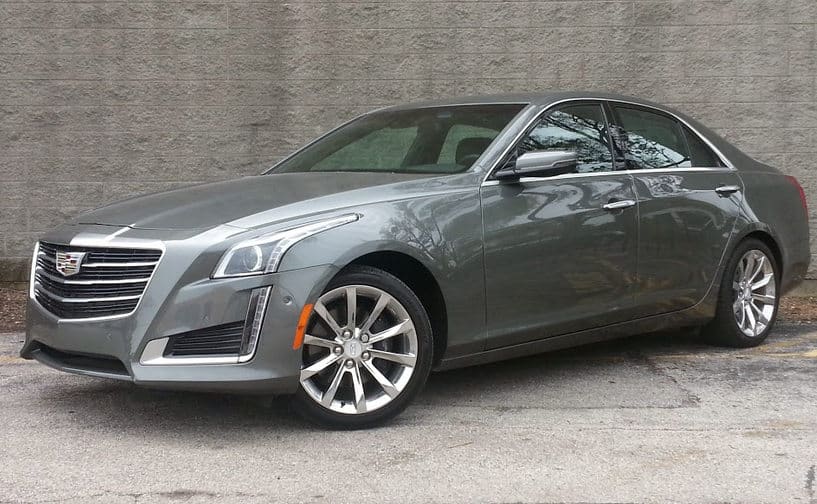
When the three letters “CTS” first emblazoned a Cadillac hood in 2003, they were far more than the technical shorthand for “Catera Touring Sedan.” They were a battle cry for the reinvention of American luxury—a revolution that rewrote the world’s perception of the American automobile, from Germany’s Nürburgring tarmac to Hollywood’s silver screen.
I. Decoding the Name: Heritage and Ambition
The “Catera” legacy traces back to Cadillac’s 1997 entry-level luxury sedan. Though this Opel Omega-based model never dethroned German rivals, it planted the seeds for Cadillac’s performance DNA. “Touring Sedan” crystallized its mission: to transcend cushy American stereotypes by fusing precision handling (Touring) with flagship presence (Sedan). This fusion birthed Cadillac’s most pivotal comeback vehicle of the 21st century.
II. Shattering Conventions: Art and Science Collide
The first-generation CTS exploded onto the scene in 2003. Designer Simon Cox carved a radical new language with crisp diamond-cut edges and vertical LED lighting—the “Art and Science” philosophy. Against Mercedes’ soft curves or BMW’s conservatism, the CTS sculpted the future with its razor-sharp profile. It even starred in The Matrix as a hero car, becoming a visual icon for the modern Cadillac era. Beneath it, the Sigma rear-wheel-drive platform empowered an American sedan to duel European rivals on Alpine switchbacks.
III. The Beast Awakens: Roar at the Ring
True disruption arrived with the 2004 CTS-V. Packing a thunderous LS2 V8, this “suit-clad brute” shattered the “lumbering American” myth with 400 horsepower. By 2008, the second-gen CTS-V unleashed a supercharged 6.2L V8 (556 hp) at the Nürburgring, setting a record 7:59.32—the fastest production sedan lap ever—dethroning the BMW M5. Its secret weapon? Magnetic Ride Control (MRC), adjusting suspension damping 1,000 times per second to glide from track aggression to highway comfort—an engineering jewel in GM’s crown.
IV. Tech Revolution: Redefining American Luxury
Each CTS generation pushed Cadillac’s technological frontier:
- 1st Gen (2003–2007): Debuted Bose surround sound, challenging German craftsmanship with digital cockpits
- 2nd Gen (2008–2013): Pioneered “Cut & Sew” leather-wrap techniques, rivaling bespoke coachbuilding
- 3rd Gen (2014–2019): Lightweight aluminum chassis trimmed weight by 10%; CUE infotainment integrated Apple CarPlay
Beyond innovation, CTS fueled global manufacturing. V8 models roared out of Michigan plants, while Shanghai-built 3.0L versions served Asian markets—a blueprint for “American DNA, global intelligence.”
V. Sunset and Legacy: The CT5 Epoch
In 2019, the CTS passed its baton to the CT5. Yet its spirit lives on: The CT5-V Blackwing, wielding a 6.2L supercharged V8 (668 hp), stands as Cadillac’s most potent production car ever. Its MRC suspension and rear-wheel steering inherit CTS-V’s track-honed DNA. As Cadillac Lead Engineer Dave Leone declared: “The CTS taught us how to carve diamonds behind the wheel.”
Three Letters, Immortal Legacy
Across 16 years and 500,000 global sales, CTS proved that three letters are more than a code—they encapsulate an American underdog’s triumph. With its vertical beacon-red tailights piercing the darkness of convention, it proclaimed that a brand once shackled by the “gas-guzzling dinosaur” stereotype could reclaim greatness through innovation and performance. The ultimate truth CTS revealed? When American ingenuity fused with racing DNA, luxury gained edge and heartbeat.